Allergy season in Southern California can bring more than blooming flowers and warmer days. Pollen, dust, and other airborne particles often find their way indoors, affecting the air you breathe every day. While many homeowners focus on outdoor allergens, indoor air quality (IAQ) plays an equally important role in maintaining a comfortable home environment during allergy season.
Your heating and cooling system and ductwork can play a key role in managing airborne particles and improving the air quality inside your home.
Signs Your Indoor Air May Need Attention
Some homeowners notice changes in indoor air quality during allergy season without immediately connecting the issue to their HVAC system.
Several signs may indicate that excessive airborne particles are circulating inside your home.
- Frequent sneezing or allergy symptoms indoors
- Dust buildup shortly after cleaning
- Stale or stuffy indoor air
- Increased respiratory irritation during the spring months
When these symptoms appear, we can help you evaluate indoor air quality solutions that are custom-tailored to your home’s particular pollutants as well as the specific symptoms that you’re experiencing.
Start With The Right Air Filter
Your air filter is the first line of defense against allergens circulating through your home. As air moves through your HVAC system, the filter captures dust, pollen, and other airborne particles before they spread through the ductwork.
During allergy season, filters can collect debris more quickly than usual. A filter that becomes clogged may restrict airflow and reduce its ability to capture allergens effectively.
High-quality filtration can help trap smaller particles that often trigger allergy symptoms, helping improve indoor air conditions during peak pollen months. However, HVAC air filters can only do so much. Since they’re designed more to protect the longevity of your HVAC system than to thoroughly clean your air, allergy sufferers usually find that further steps go a long way toward reducing symptoms indoors.
Consider Whole Home Air Purification
Air purification systems work alongside your HVAC equipment to help reduce airborne contaminants. These systems are designed to capture or neutralize particles that standard filtration may miss.
Whole home purification systems operate through the ductwork, allowing treated air to circulate throughout the entire home rather than focusing on a single room.
This approach can help reduce allergens, airborne particles, and other pollutants that may accumulate indoors during allergy season.
The Role Of Humidity In Indoor Air Quality
Humidity levels also affect indoor air quality and comfort. When indoor air becomes too dry or too humid, it can contribute to respiratory discomfort and allow certain allergens to thrive. Wet air also causes particles to clump together.
Balanced humidity levels can help create a more comfortable indoor environment. In some houses, whole-home humidifiers or dehumidifiers can regulate moisture levels and support healthier indoor air and are easily controllable from a central thermostat.
Proper humidity control can complement filtration and purification efforts, creating a more balanced indoor environment.
Ductwork and IAQ
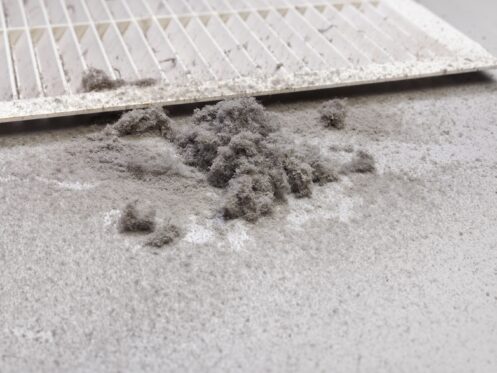
If your ducts are dirty, those pollutants will be pushed out and circulated throughout your home while your system runs. Similarly, damaged ducts with gaps and cracks allow dust, pollen, and other materials to escape through the damaged sections.
Sometimes, when ducts are poorly designed and have corners that are too sharp or too broad, grime and other materials can collect in the turns as the air blows them through. It’s similar to sand or mud deposits that are carried by a river’s current and then collect and pile up along the riverbank as the water twists and turns. It collects there, affecting airflow and becoming larger as more contaminatiom piles up.
These are the reasons why clean, well-designed, and intact ducts are important for maintaining healthy indoor air.
Professional Indoor Air Quality Solutions
Improving indoor air quality often involves multiple strategies working together. Air filtration upgrades, purification systems, humidity control, and regular HVAC maintenance can all contribute to a healthier indoor environment.
Each home may have different air quality needs depending on factors such as ventilation, household activity, and seasonal allergens. Homes with pets or immunocompromised individuals require additional, more powerful IAQ solutions.
For homeowners in Pasadena, CA, maintaining healthy indoor air during allergy season can make a noticeable difference in everyday comfort. At Bryant Heating & Air Conditioning, we provide HVAC maintenance, filtration upgrades, and indoor air quality solutions designed to help reduce airborne allergens inside your home.
Contact Bryant Heating & Air Conditioning today to learn how we can help improve your indoor air quality.